5 Reasons Why Parents Who Put Their Own Phone Down First Are Winning the Screen-Time Battle
So we stopped fighting about it and started doing one small thing together instead. Here are the 5 reasons it worked, in two minutes.
You’ve said “screens off” and watched it turn into the same fight every night — the timers, the reward charts, the bribes, and nothing that sticks for more than a couple of days.
Then your own phone buzzes and you look down, right in the middle of telling your kid to put theirs away. And the thought hits before you can stop it. How do you get a kid to quit something you can’t seem to quit yourself?
You stop being the bad guy.

The reason “screens off” turns into a war is that it’s one-sided — you take theirs away while yours stays right there in your hand, and they feel it instantly. So they stop taking the rule seriously and start to resent you for it, and every night you’re the villain again, the one who ruins everything right before bed. You shouldn’t have to be the bad guy just for trying to do right by them.
Some nights you just give in — not because you changed your mind, but because you’re too tired for another fight — and then you feel like a hypocrite and a pushover in the same breath. But that was never weak parenting. These apps were built by billion-dollar companies to be impossible to put down, and you were never beating that with a sticker chart. It’s not your willpower that broke — you were set up to lose.
So you stop starting with their screen and start with yours. You put yours down first, you both open the book together, and screen-free time stops being something you’re doing to them. Now you’re doing it too, and there’s nothing left to fight once you’re on the same side.
Your kid copies your curiosity.

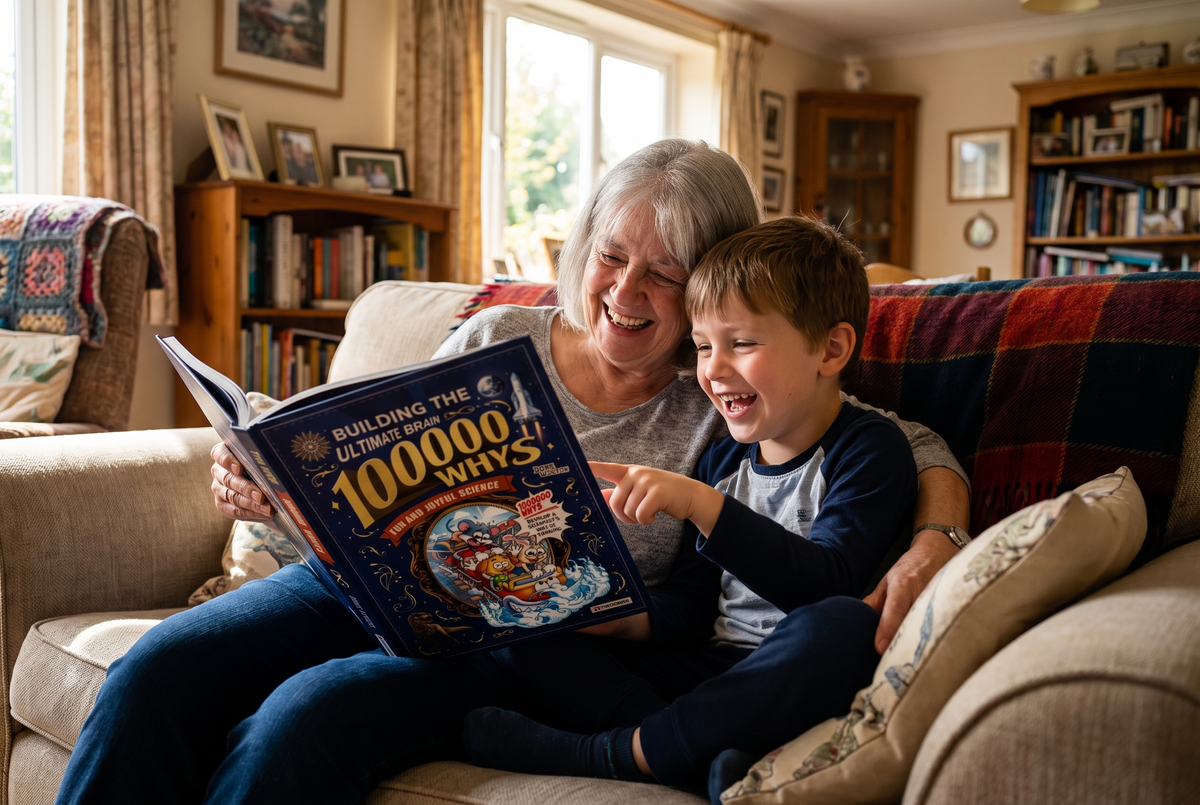
Kids are mimicking machines, and they don’t just copy what you do, they get curious about whatever’s got your attention. So when you open to “why do we dream” and you honestly don’t know the answer either, they see you actually want to find out, and they want in. They start asking questions right alongside you. Every page is just one question and one picture, small enough that a seven-year-old can explain it back to you at dinner, and the first night they do, you’ll feel it stick.

It fills the time the screen took.

You’ve seen where the screen takes them — the glazed eyes, the way you can say their name three times and get nothing back. And you’re not making it up. You know what it’s doing to their brain, you’ve read it’s one of the leading causes of depression in kids their age, and honestly you don’t even need the studies — you can see it in them. Quieter. Flatter. The meltdowns when you take it away aren’t a tired kid, they’re a real craving, and you know exactly what that feels like because you’ve got your own version of it.
Underneath it all, this was never about fewer minutes on a screen. You want them back — engaging with the real world instead of scrolling endlessly through it, actually wanting something off the screen instead of getting marched away from it.
Take the tablet away and you leave a hole, and if you don’t fill it the tablet climbs right back in. A kid gets good at whatever they practice — scrolling trains them to jump every few seconds, a page trains them to stay with one thing. Every night with the book is a rep the other way. And one day the house is calmer, they reach for it on their own, and they explain something at dinner with their eyes actually there.
End the screen fight →It’s a real book, not a cheap knockoff.
You already know the $40 “encyclopedia” from some random ad, the one that turns up thin and lifeless and clearly churned out by a machine. This is nothing like that. It was written by a real author named Doris Walton and illustrated by hand, not slapped together by AI like the slop flooding every marketplace right now.


What you see in these photos is exactly what lands on your doorstep, a real hardcover with the price printed right on the back and real pages a kid actually wants to turn, and if it ever turns out to be anything less than that you just send it back.
You become the one who gave them better.

Anyone can hand a kid an iPad, but being the one who gives them a reason to put it down is a different thing entirely, and it quietly says the thing you never quite manage to say out loud, that they matter more to you than whatever is on the screen. You might miss a notification, or leave your phone in the other room for ten minutes, but you were there. It’s also the gift that makes a grandparent the favorite, because it’s screen-free and real, and it pulls the whole family in over one page instead of scattering everyone off to their own glowing screen. A report card, a birthday, or just a Tuesday night that finally didn’t end in a fight — this is the part they remember. You don’t have to be a big reader to give them that. You just have to want one good screen-free moment a day.
End the screen fight →
100,000 Whys — Building the Ultimate Brain
100,000 Whys — Building the Ultimate Brain
Free shipping from the US · 30-day money-back guarantee
Secure checkout · Free shipping · 30-day guarantee